Investigation
Parent: 🔥 Hong Kong Fire 2025
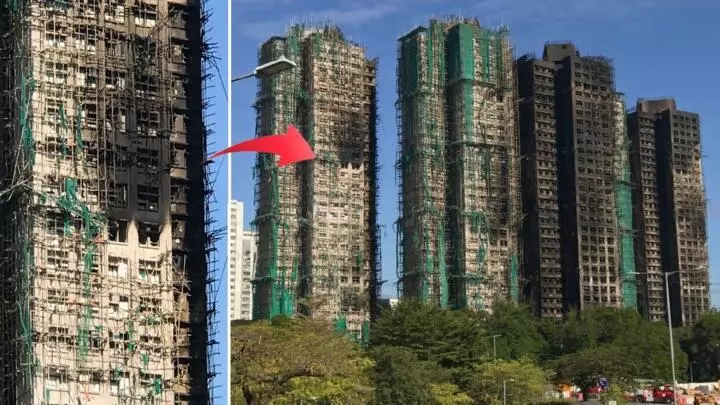
Photo: Mak Yenting/RFI.
Findings and Evidence
- Materials evidence: Police collected 20 netting samples across Wang Tai, Wang Do, Wang Yan, Wang Chi; 7 failed flammability tests, with harder-to-reach samples more likely to fail, raising mixing/switching suspicions (NBC/AP, RTHK). ICAC says contractors bought ~2,300 rolls of non-compliant mesh at HK$54/roll after typhoon damage, then 115 rolls of compliant mesh at HK$100/roll installed at scaffold bases to pass spot checks (news.gov.hk).
- Independent burn tests: InMedia collected 40 scaffold-net fragments within ~400m of the site (Nov 29–Dec 2); 5 samples ignited instantly and burned upward with falling fire debris (some for up to ~6 minutes), while ~70% would not ignite and 8 shed fire flecks without lighting paper below. Construction union leader Chau Si-kit (周思傑) noted compliant nets can light but should self-extinguish quickly, and standards bar sustained flame/dripping (InMediaHK).
- Foam/polystyrene: Panels sealed windows (incl. elevator lobbies), accelerating spread; melted at >500C and blew out windows (Reuters/CNN).
- Alarms and systems: Post-fire inspections found alarms non-functional across all eight towers. Apr 2 hearing round revealed an ISS EastPoint electrician deactivated the entire fire safety system months before the fire — ordered by Prestige to drain water tanks, he shut down the main switch, unknowingly cutting all fire alarms across eight towers. He knew only a registered contractor was legally authorized but complied, "worried he would be penalised." Victory Fire Engineering's director discovered the main switch was off a week before the fire but only told staff to inform ISS: "Don't tell others how to do their jobs" (CNN/BBC, Straits Times). A Wang Cheong resident’s door-cam footage shows no alarm and smoke engulfing the corridor within 8 minutes (2:52–3:00 p.m.) before he fled by elevator (HK01).
- Probable cause (Mar 19 hearing): Lead lawyer Victor Dawes said the most likely cause was cigarettes that ignited materials on a platform in an air shaft between two low-level units in Wang Cheong House; burned paper boxes and cigarette butts were found, though no direct proof of causation. The Labor Department had previously received complaints about construction workers smoking on scaffolding, with photo evidence, but said it "could not be substantiated" after checking; forwarded the complaint to FSD, which said it was "not part of its duty" (AP).
- Fire spread and access: Initial outbreak on lower exterior of Wang Cheong House; spread to Wang Tai, Wang Shing, Wang Yan; Wang Chi largely spared (Guardian/Reuters). Interior temps reported above 500C; falling scaffolding and debris hindered rescues (CNN/Reuters/AP). Staircase windows were boarded up with wooden planks, causing smoke and fire to enter escape routes (AP Mar 19).
- Resident account: Survivor Yip Ka-kui described hearing bamboo poles “explode” and mesh igniting before foam-sealed windows trapped his wife Bai Shui Lin, who died after warning neighbors (CBS News).
- Testing/documentation gaps: Pulse HK reports “testing reports” posted at other sites by contractor Hong Yip were merely mainland factory certificates (e.g., Binzhou center) that can be printed freely; another cited “National Labor Protection QC Center (Beijing)” was confirmed “100% fake.” HK01 similarly found multiple estates (e.g., Cheung Sha Wan Yee Kak, Chai Wan Fung Wah) displaying Binzhou/Beijing certificates for Shandong Chenxu nets; the Beijing lab said any post-2019 report using “監督” was “100% fake,” and numbers with “發證質檢(網)” were bogus (HK01). Whistleblower 潘焯鴻 (Jason Poon) stresses only HOKLAS/CNAS lab sampling after delivery counts; industry veteran says temporary materials like scaffold nets rely on self-checks by the site’s Authorized Person, creating loopholes unless consultants enforce sampling and verify suppliers/labs (Pulse HK).
- External expert assessment: Grenfell Tower inquiry expert José Luis Torero (UCL) says Wang Fuk Court and Grenfell shared vertical spread driven by combustible exterior materials and smoke overrunning corridors/stairs; bamboo/netting may have aided but likely not the main driver versus foam/polystyrene cladding and channel-flow between closely spaced towers. He frames the disaster as a systemic competency failure across contractors, engineers, management, and regulators, calling for a Grenfell-level technical inquiry into materials, spacing assumptions, compartmentation, and smoke-path failure (Yahoo/信報).
- Policy and regulatory actions: Mainland authorities ordered a nationwide inspection of high-rises—especially under renovation with bamboo/wood scaffolding and non-flame-retardant nets—while Hong Kong said 7 of 20 netting samples failed and signaled a gradual shift toward metal scaffolding without blaming bamboo alone (WSJ).
- Market-wide testing (Dec 2025): Castco Testing Centre (佳力高試驗中心), a HOKLAS-accredited government-designated lab, received over 100 inquiries after the Wang Fuk Court fire and tested ~20 scaffolding net samples from contractors and netting companies this month; ~80% failed fire-retardancy standards. One sample burned for over 40 seconds—10 times the 4-second average limit required under standards. Lab video shows fire spreading upward with burning debris falling, net almost entirely ablaze, and debris continuing to burn after the test ended. Senior manager Chan Man-kwong (陳文光): "If it burns that long, it absolutely has no flame retardancy." Construction union leader Chau Si-kit (周思傑) notes the industry historically treated scaffolding as temporary equipment and undervalued fire safety for major repairs (Now News).
- New regulatory measures (Dec 2025): Authorities introduced strengthened controls: contractors must provide flame-retardancy performance certificates for scaffolding nets; incoming materials must be sampled and tested after arrival in Hong Kong; designated-lab test reports must carry digital signatures for authentication; testing turnaround is ~3 working days (Now News).
- Oversight fallout: Officials suspended 28 other renovation projects run by the same contractor while citing cost-cutting mesh swaps after a typhoon; analysts warn the safety gaps and bid-rigging risks extend across Hong Kong’s high-rise stock (AP).
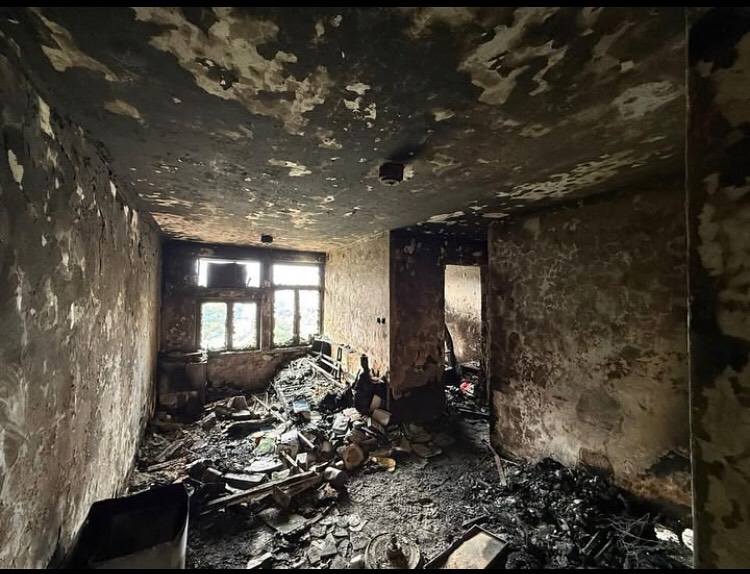
- Scene documentation: On Nov 30 the Disaster Victim Identification Unit entered the towers to map interiors and recover remains; widely shared photos show flats reduced to ash with exposed rebar, blackened walls, and charred fixtures, highlighting the scale of destruction across seven of eight blocks (The Standard).
Insurance and Liability
- Taiping Hong Kong (insurer for Wang Fuk Court renovation and estate policies) paid a first batch of nine home-insurance claims totaling HK$5.372m on Dec 1; the estate’s property insurance carries a reported HK$20b sum insured with third-party liability cover up to HK$200m per incident, backed by reinsurance partners including Qianhai Re, China Re P&C, and Taiping Re (Sina).
- Coverage in place includes construction all-risk, employees’ compensation, owners’ corporation third-party liability, property all-risk/public liability, and some household/helper policies; industry estimates expect payouts to approach policy limits, with reinsurers sharing the exposure (Sina).
Tender Irregularities and Oversight Gaps
- Industry-wide bid-rigging scope: Since 2023, Competition Commission and ICAC crackdowns dismantled at least 4 bid-rigging syndicates involved in 70+ renovation projects worth HK$2.3 billion. In September 2025—less than three months before the fire—the Competition Commission raided 9 contractors in connection with alleged bid-rigging involving 25 projects worth HK$600 million, describing two syndicates as "sizable" with "cohesive organizational structures" that had been "operating for some time" (Bloomberg).
- 2015 first conviction: Hong Kong's first bid-rigging conviction saw a middleman sentenced to 35 months for conspiracy to offer bribes totaling ~HK$45 million. Judge Josiah Lam warned that lack of competition and oversight allowed contractors to "further lower the quality of a project" and "maximize exorbitant profits" (Bloomberg).
- Mandatory Building Inspection Scheme (MBIS): The Wang Fuk Court renovation was commissioned under the 2012 MBIS; after the 2023 tender the price jumped from an estimated HK$140m to HK$330m (RFI).
- Budget escalation: SCMP reports internal documents showing Wang Fuk Court’s budget rising from HK$152m (Sep 2023 analysis) to HK$336m after adopting the most expensive option, including full mosaic removal/repaving and added drainage/fire upgrades; experts call the renovation sector “rotten” with bid-rigging/collusion and urge an overhaul (SCMP).
- Alleged bid-rigging and interference: Residents reported suspected triad-linked individuals blocking dissenting owners from meetings; a new owners’ corporation replaced the old one in Sep 2024 after the contract was already signed (RFI).
- Academic/press analysis of collusion: Points Media cites a 2022 paper (Leung Tsang Tsui, Singapore Economic Review) using the now-closed FactWire database to show the Mandatory Building Inspection Scheme cut owners’ bargaining power, raising renovation bids ~40% and fostering collusion; Prestige Construction & Engineering Ltd. (宏業建築工程有限公司; aka Hong Yip Construction Engineering) was among the most active firms (104 bids, with unusually high/low rankings). Article notes pro-Beijing Ta Kung Pao removed a piece calling Prestige a “常勝將軍,” and quotes anonymous consultants alleging “招標妥” advisors take kickbacks, eroding oversight (Points Media).
- Property management role: Bloomberg reports ISS A/S shares fell up to 11% on Dec 2 after SCMP noted its unit EastPoint Properties acted as Wang Fuk Court property manager. ISS says it only handled administrative tendering for the Incorporated Owners via an e-tender platform, made no recommendations, and welcomes the judge-led independent committee (Bloomberg).
- URA scoring controversy: HKEJ says contractor Prestige Construction & Engineering Ltd. (宏業建築工程有限公司; aka Hong Yip Construction Engineering) received a 100/100 “project management” rating under the Urban Renewal Authority’s Building Rehab Company Registration Scheme. URA admits the display could mislead the public into thinking it is an overall contractor grade rather than a system-integrity check; the scheme also did not require declarations of site-safety convictions. URA plans to revise the audit scope/methods/display and to review its “招標妥” tender-support service to ensure consultant technical scoring is based on verifiable data and to reduce corruption/bid-rigging risks (HKEJ).
- ICAC complaints and scope concerns: Residents told i-Cable they tipped ICAC before the contract was signed but were asked for evidence and saw no probe until after the fire; a July 2024 owners’ briefing featured a lawyer warning owners they would bear legal liability if a leadership change voided the contract, discouraging a halt. The contractor reportedly runs repairs at 11 estates; other estates paused work and removed scaffold netting after the blaze while consultants demanded proof of flame-retardant materials and stricter site no-smoking enforcement (i-Cable).
- Complaints ignored: During works, residents complained to multiple departments about flammable mesh and foam sealing windows but “got nowhere”; disqualified pro-democracy district councillors who tried to assist were expelled for lacking official status (RFI).
- Historical context: FactWire's 2017 database (3,000 bids across 220 estates) highlighted systemic bid-rigging patterns in building maintenance—low consultant fees, market concentration, irregular pricing—mirroring current suspicions FactWire.
- Prior enforcement: In April and August 2024, ICAC and the Competition Commission conducted two joint operations against syndicates suspected of graft and bid-rigging, arresting 25 people (HKFP).
- Parallel cases post-fire:
- Sui Wo Court (near Wang Fuk Court): Residents gathered every weekend since early 2025 to voice concerns about a HK$371 million maintenance project that was supposed to wrap up in December but has not been completed; one resident reported receiving an anonymous thank-you card for allowing someone to vote on her behalf when she had voted in person. Homeowners committee chairwoman Pauline Leung Po-ling denied wrongdoing; ICAC said no case to answer (Bloomberg).
- Fairview Park (Yuen Long): Homeowners campaigned against a HK$500 million plan to replace underground water pipes. In September 2025 the property management company refused to provide a detailed budget breakdown, tender evaluation criteria, or contractor identity before contract signing; after the Wang Fuk Court fire the company agreed to residents' demands and halted the project. At least 30 residents marched to ICAC to demand an investigation (Bloomberg).
- Post-fire Kwun Tong sweep (Jan 2, 2026): ICAC arrested 21 people (15 men, 6 women, aged 30–81) over renovation bid-rigging at two Kwun Tong estates, neutralizing a "building maintenance corruption syndicate controlled by individuals with triad background." Targets included intermediaries, engineering consultants, and owners' incorporation members; one HK$33m contract allegedly secured via bribes. The operation underscores systemic bid-rigging concerns amplified by the Wang Fuk Court fire (HKFP).
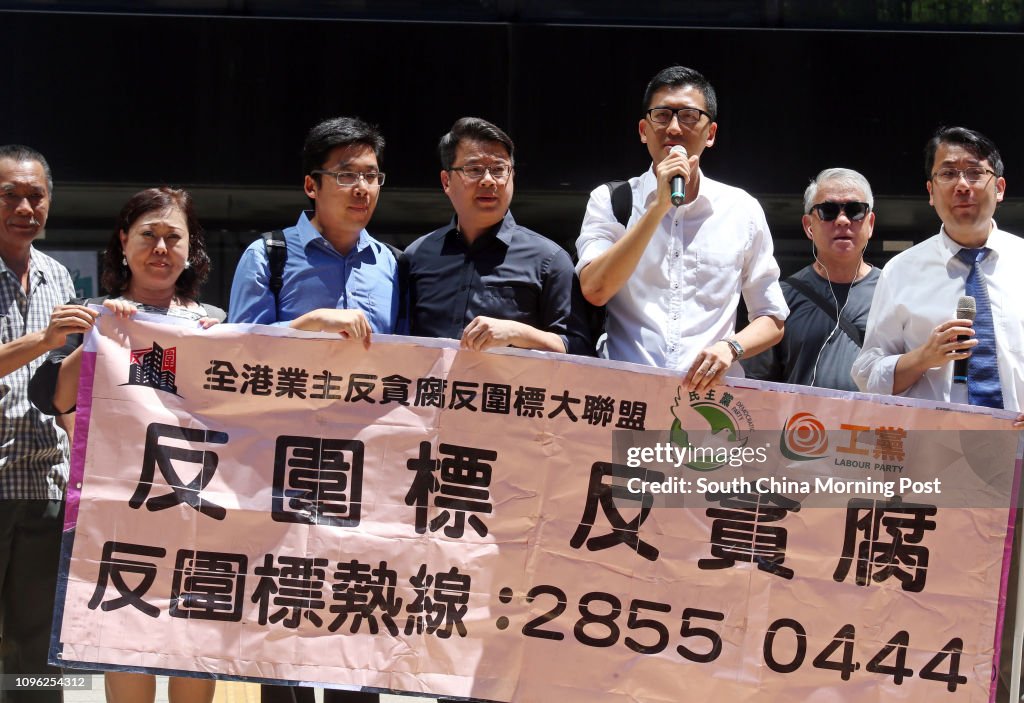
- Anti-bid-rigging push (2016): Former ICAC investigator and Democratic Party lawmaker Lam Cheuk-ting, long active on bid-rigging cases, stood with the Anti-Bid-Rigging Alliance to warn government amendment proposals lacked deterrence and called for stronger criminal sanctions; they cited a decade of systemic tender corruption and publicized a hotline (HK01).
- Demands for action: Whistleblower 潘焯鴻 (Jason Poon) posted on Nov 26 urging immediate net inspections at other estates (e.g., Sui Wo, On Kay), evacuation/rehousing of ~3,000 households, criminal probes into fake netting documents, accountability for regulators, an Independent Commission of Inquiry, and travel bans/detentions for key IO members/contractors to prevent evidence flight (Facebook).
Arrests and Probes
- First charges over the fire itself (Jun 10, 2026): Police and the ICAC jointly charged 7 individuals and 2 companies with 25 offences at West Kowloon Law Courts — the first prosecutions directly for the deaths. Facing five counts of manslaughter are Will Power Architects director Wong Hap-yin (黃俠然), its registered inspector Wilson Ng (吳躍), Prestige Construction director Ho Kin-yip (何建業), and the two firms (consultancy Will Power Architects = 鴻毅建築師有限公司, and main contractor Prestige Construction & Engineering = 宏業建築工程有限公司); the three men were denied bail (some reports: five remanded). The wider charge sheet — also naming Prestige director Hau Wa-kin (侯華健), Will Power assistant manager Lin Min (李敏), and Wong Hap-yin's wife Chung So-fan (鍾素芬) and friend Hung Kwok-wai (洪國偉) — includes conspiracy to defraud, money laundering, attempting to pervert the course of justice, and tax evasion. ICAC principal investigator Hazel Law said the conduct was "fuelled by greed." Authorities released the full list of all 168 victims' names for the first time; the case is adjourned to Sep 2, 2026 (HKFP HK01).
- Buildings Department prosecution — 259 charges (Sep 9, 2026): Separately from the police/ICAC criminal case, the Buildings Department — after a joint investigation with the Housing Bureau's Independent Checking Unit — laid 259 charges against the same two firms and four individuals: Will Power director Wong Hap-yin, its registered inspector Ng Yeuk (named Wilson Ng by some outlets), and Prestige directors Hau Wa-kin and Ho Kin-yip. The charges, brought under the Buildings Ordinance, cover defective or non-compliant materials (prosecutors allege non-fire-retardant scaffold netting, canvas and foam boards, and fire-escape windows removed and covered with those materials — which "helped the fire spread" and hindered escape), works that caused injury or property damage, and the inspector's failure to adequately supervise the prescribed repairs or ensure the buildings were safe. It came nine months after the blaze (HKFP, The Standard).
- Bid-rigging crackdown (Mar 25, 2026): In a parallel track, the ICAC and Competition Commission jointly charged 23 people and companies over alleged bid-rigging, corruption, and anti-competitive conduct in renovation projects across 13 housing estates/buildings — the systemic problem the Wang Fuk Court fire exposed (The Witness).
- ICAC strategy: ICAC told Bloomberg it is pursuing a "three-pronged strategy of law enforcement, systemic prevention and community education" to combat corruption in building maintenance and renovation (Bloomberg).
- Safety certificate forgery: Police launched 8 investigations into alleged forgery of safety certificates required to certify scaffolding netting was flame-retardant; lime-green netting swiftly removed from 200+ buildings undergoing major maintenance on government orders (Bloomberg).
- Updated totals (as of Mar 19, 2026): Police have arrested 38 people on accusations including manslaughter and fraud; 9 have been charged. ICAC arrested 23 on suspicion of bribery and conspiracy to defraud (AP).
- Manslaughter: 16 arrested on gross negligence related to renovation works; early arrests included contractor directors/consultant; later arrests expanded to scaffolding subcontractors and intermediary (HKFP).
- ICAC: Probe arrested 8 linked to renovation project (directors, project managers, subcontractors, intermediary); total 12 arrests reported including consultants, contractors, scaffolding heads (news.gov.hk). On Dec 17, ICAC arrested current OC chairperson Tsui Mun-kam (徐滿柑) and former chairperson Tang Kwok-kuen (鄧國權), who served five consecutive terms (2012–Sep 2024) and signed the HK$330m repair contract (on.cc).
- Fire-services contractor fraud (Dec 3): Police arrested six men (aged 44–55) from the fire-services contractor for alleged fraud, accusing them of falsely telling FSD they would not disable alarms during works while submitting notices citing only hydrant/hose reel shutdowns; all bailed to report in Jan 2026 (HK01).
- Materials: Police and officials allege flammable mesh/foam used; some netting initially certified compliant; ongoing verification of actual materials used on-site.
- Non-statutory review: Chief Executive John Lee announced a judge-led committee (non-statutory), pledging administrative directives for evidence access; statutory Independent Commission of Inquiry was rejected despite civic calls (RFI). On Dec 12 he said the panel, chaired by Electoral Affairs Commission head Judge David Lok, will report within nine months and examine systemic construction risks, conflicts of interest, collusion, and bid-rigging (Reuters).
- First public meeting (Feb 5, 2026): The independent committee held its first public meeting at City Gallery in Central. Senior Counsel Victor Dawes, the committee's leading counsel, said it had received evidence from authorities including "key information and clues" and already has a good understanding of the fire's cause and systemic issues. Residents can apply to give evidence by Feb 12; approved applicants must file submissions by Feb 23. Next hearing scheduled for Mar 19 when evidence examination begins. Judge Lok noted the committee could recommend conversion to a statutory Commission of Inquiry if powers prove insufficient, but said this would take "years" versus the expedited nine-month timeline. Attendees included lawyers for the committee, government, URA, and ISS Eastpoint Properties Ltd.; representatives of the Competition Commission, ICAC, and DOJ; and counsel for Wong Hap-yin, a director of Will Power Architects Company Limited (the consultancy overseeing repair works)—the only arrested person to attend. Residents called for accountability, with one surnamed Chan saying: "I hope the investigation will clearly determine the insufficiencies of each government department so that we won't ever see this happen again" (HKFP).
- First evidential hearing (Mar 19, 2026): Dawes revealed the most likely cause was cigarettes igniting materials in an air shaft; stated "nearly all fire safety systems meant to protect lives failed because of human factors"; presented CCTV footage, documents, and text message records. Detailed multiple government oversight failures. 37 households lost 2+ family members. Survivor Yip Ka-kui called the evidence "explosive" — "It seems to be a series of ... covering up for each other." (AP).
- Tender-process scrutiny (Mar 26, 2026): Wang Chi House resident Wong Suk-lan testified that DAB Tai Po South councillor Peggy Wong (黃碧嬌) — consultant to the OC management committee (2021–2024) that approved the HK$330m renovation — had "volunteers" who pressured elderly owners into signing proxy authorisation letters; she heard rumours of "fake authorised votes." Wang Tai resident Yuen Chung-man, who lost his parents, testified Prestige won despite widespread resident opposition: "We thought that something was going on behind the scenes." Peggy Wong has denied any wrongdoing (HKFP).
- First round of hearings (Mar 19–Apr 2, 2026): Eight hearings revealed ISS EastPoint staff illegally deactivated fire safety systems; Victory Fire Engineering knew but did nothing; Prestige had 24 safety convictions (2017–2023), was the priciest of 57 bids, had its criminal record amended to "clear" in the evaluation report, and 570 votes were cast despite only 293 residents/proxies present. Government lawyer Jenkin Suen acknowledged: "The government bears unshirkable responsibility." Two more rounds to follow through Apr 30; panel expected to complete investigations ~Sep 2026 (Straits Times).
- Second round ninth session (Apr 8, 2026): Fire services contractor China Status Development and Engineering, hired by Prestige, filed 85 shutdown notices from Apr 7, 2025 to deactivate the fire hydrant and hose reel system across all eight blocks — but conducted no on-site inspections, acting as a "rubber stamp" for Prestige. A separate FSD official testified that another contractor failed to notify authorities after discovering drained water tanks and main power switches shut off for both hose reels and alarms (SCMP).
- Petition-forgery referral (Apr 10, 2026): Home Affairs Department referred homeowners' petition for a general meeting with administrator Hop On Management to law enforcement, alleging "the so-called petition lacked authentication mechanisms and may involve people impersonating owners and forging signatures." The petition had 428 valid signatures as of Apr 8 (down from 431 after invalid signatures removed) — above the 5% threshold (≥100 of 1,984 units) required under the Building Management Ordinance. Hop On (a Chinachem subsidiary) rejected the demand Apr 5, and plans an in-person "update session" in early May on financial matters (HKFP).
- OC board testimony (Apr 17 & 20, 2026): Former OC chair Tony Tsui (Apr 17) testified the owners' corporation "tried to prevent the use of flammable materials in the renovation project but was unsuccessful." At the 15th hearing (Apr 20), ex-board member Jason Kong said enforcement agencies "failed in their duties" despite repeated complaints. Kong joined the board in May 2024 under chair Tang Kwok-kuen, was re-elected under Tsui after residents ousted Tang's board in Sep 2024 over renovation dissatisfaction. He raised protective-net concerns to the Housing Bureau's Independent Checking Unit (officer Amanda Lau responded but did not confirm any fire-retardancy check); when the board pushed Prestige to replace foam boards with fire-retardant ones, Prestige refused; his proposed tiered smoking-penalty system was met with a Prestige promise to "enhance staff training" that produced no improvement. A Will Power Architects director personally came to the estate to defend foam-board use. Kong called for Lau, Prestige and Will Power directors, and DAB councillor Peggy Wong to testify (HKFP).
- Witnesses refusing to testify: Directors of Prestige Construction & Engineering, directors of Will Power Architects, and a manager of ISS EastPoint have refused to testify before the committee (HKFP).
- Labour Department testimony (Apr 21, 2026): Three occupational safety officers (Lam Sau-ching, Li Man-pong, Murphy Yuen) testify the department conducted 17 unannounced inspections at Wang Fuk Court since mid-2024, stepping up to near-monthly frequency after complaints. Despite repeated smoking complaints, inspectors found no evidence of workers smoking and concluded complaints were "not justified" — Lam clarified this meant only that evidence was not visible at inspection time, and agreed workers may have smoked anyway. Smoking at construction sites is not currently an offence; officers must assess fire risk before issuing a smoking ban. A proposed blanket construction-site smoking ban would remove that prerequisite; post-ban, enforcement would rely on resident evidence, circumstantial evidence (cigarette butts), and potentially drones modeled on the Tobacco and Alcohol Control Office. On the outdated fire-retardancy certificate Prestige submitted after typhoon-damaged net replacement, Lam admitted officers did not check certificate issue dates and lacked fire-retardancy expertise: "We do not have relevant qualifications, and we won't collect samples and conduct tests." Yuen said the department could have cross-checked certificates against the Housing Department's approved-labs list but relied on contractor integrity: "If some contractors are bent on tricking us, there's nothing we can do." On removed fireproof windows and wooden boards in emergency staircases, Li said the boards served as entry/exit points for scaffolding workers (climbing outside is forbidden due to fall risk); Judge David Lok noted this "appeared to suggest a conflict of interest between workers and residents." Four FSD officers scheduled to testify Apr 22 (HKFP).
- FSD command testimony (Apr 24, 2026): Deputy Director Derek Armstrong Chan testified the Emergency Alert System was not triggered because it was "not suitable" — officers feared a phone alert would send residents into smoke-filled corridors, and text alerts issue only an hour after activation. The "disaster" signal was withheld (reserved for citywide, PLA-level incidents); Chan conceded an earlier No. 4 alarm "would have helped a little." Deployment was among HK's largest ever: 391 fire engines, 185 ambulances, 2,311 personnel, escalated to a No. 5 alarm. On firefighter Ho Wai-ho: Divisional Officer Tung Wing-kei said Ho's breathing-mask metal valve had "extremely rare" damage likely from "severe impact"; Ho never passed a commander the "red key" activating the firefighter locator system, and entry/air monitoring could not be set up at Wang Cheong House (the block Ho should have entered) because of debris and intense fire — Ho mistakenly entered Wang Tai House after stopping to help a wheelchair user (HKFP).
- Government departments summary (hearings Apr 13–30): FSD Director Andy Yeung said the department should be the "ultimate gatekeeper" for fire risks — contradicting Assistant Director Michael Yung (Apr 22), who said flammable netting, foam boards, and worker smoking fell outside FSD's purview. Buildings Department Assistant Director Karen Cheung said the access openings and foam boards breached building regulations, conflicting with the Housing Bureau ICU's submission that foam boards were "temporary materials" outside regulation. Officials repeatedly described oversight as "not good enough"; Judge Lok flagged a "grey area" over which department owned fire-hazard responsibility (HKFP).
- ICU testimony (May 6–7, 2026): Housing Bureau Independent Checking Unit surveyors admitted the unit tipped off consultant Will Power Architects before inspections — only 2 of 10 ICU checks at Wang Fuk Court were unannounced (one only because surveyor Andy Ku had a Tai Po medical appointment that day). ICU testing showed scaffold nets "continued burning for more than 10 seconds," yet Ku told the Buildings Department the nets met standard, conceding the unit relied on the contractor's word and lacked "a formal auditing system." Surveyor Nick Yung said the whole-outer-wall project should have been high-risk but was logged as "minor works" for homeowner convenience — a "loophole" yielding no regular inspections; the ICU only learned of a 2023 Buildings Department policy requiring random 20% minor-works inspections in Jan 2026, after the fire (HKFP HKFP).
- Fourth round concludes (May 8, 2026): Across four rounds — 24 hearings, 77 witnesses, four and a half months — the committee documented failures by five key parties (contractors/subcontractors, fire-service contractors, engineering consultants, property management/OC, and government regulators). Hearings suspended pending the inter-departmental fire investigation team's final report (due mid-May); resumption expected mid-to-late June. Judge Lok said evidence so far had not confirmed widespread bid-rigging beyond Wang Fuk Court (The Standard).
- Reform response: On May 12 the government announced a six-point building-maintenance reform plan (four-monthly inspections for large projects; tech-driven random audits; registered inspectors filing supervision plans with legal liability; mandatory material testing and a styrofoam/combustible-exterior ban; phased construction for multi-block estates; tighter Buildings–Fire–Labour coordination). On May 27 it opened a one-month public consultation (due Jun 25) on amending the Fire Services Ordinance and three subsidiary regulations, with a LegCo bill due later in 2026 (The Standard HKFP).
- Fifth round / statutory-powers ruling (Jun 22, 2026): Hearings resumed after a six-week break to take expert evidence on the fire's cause. Judge David Lok declined to seek statutory Commission of Inquiry powers, saying a statutory inquiry would take roughly twice as long and delay the final report to at least Q2 2027, and that the committee's current powers suffice. Expert witnesses: Lam Kin-kwan (deputy head, interdepartmental investigation task force), Dr Lee Wing-man (Government Laboratory chief chemist, forensic science), and Richard Yuen Kwok-kit (CityU chair professor of architectural engineering) (SCMP).
- Hearings conclude / closing submissions (Jul 16, 2026): After 30 public sessions, 80 witnesses, and over 1 million documents since Mar 19, lead counsel Victor Dawes SC files a 627-page closing address finding the fire "preventable and foreseeable" and caused by "continuous fraud, bad materials, false certificates, and blatant lying." The government bears an "unshirkable responsibility" via the ICU, Buildings Department, Fire Services Department, and Labour Department, whose "honour system" left hazards uninvestigated; the ICU failed to notice fireproof windows removed from stairwells and its advance inspection notices let Prestige prepare for checks. Parties condemned: Prestige Construction (non-retardant nets, flammable foam boards), Will Power Architects (inadequate supervision), Gain Profit (net procurement), China Status ("rubber stamps"). Government Laboratory tests: scaffold mesh across five blocks failed fire-retardancy; non-compliant netting emits 27× the heat of compliant mesh, and compliant nets could have let the initial fire self-extinguish. Only Wang Sun House's alarm rang (~54-min window, ~70 flats out); the mobile Emergency Alert System was never triggered and engines arrived with sirens off as standard practice. Recommendations: strengthen the URA Smart Tender Scheme, mandate litigation-record disclosure, reform proxy-voting rules. The panel continues processing evidence; the final report is due by end October 2026 — the CE granted a time extension on 18 Aug 2026 (the earlier "~Q2 2027" estimate applied only had the committee sought statutory Commission-of-Inquiry powers, which it declined) (SCMP, SCMP: delay to late October, HKFP).
- Contractor fallout: Hung Ngai Architects Ltd. (宏毅建築師) — consultant on Wang Fuk Court and other estates; this is apparently the same Wang Fuk repair consultancy later charged (Jun 10, 2026) as Will Power Architects Company Limited / 鴻毅建築師有限公司 (early reports romanised 鴻毅 as "Hung Ngai" and one rendered the character as 宏毅) — reportedly announced an immediate suspension/termination of all business after ICAC arrests; owners’ groups at Aberdeen Centre Phase 1 and On Kay Court voted to end their Hung Ngai contracts (on.cc).
- Parallel estate alarm: At Ngon Kei Court (Ngon Kei Yuen) on Dec 1, contractor Wai Lei Construction flame-tested scaffold-net samples from multiple floors; some ignited instantly. Consultant Hung Ngai (same as Wang Fuk Court) attributed it to glue drips, but residents called for replacing the consultant despite HK$150m repair costs; management blocked additional media sampling and called police (HKEJ).
Open Questions
- Fire cause: Mar 19 hearing identified cigarettes in an air shaft as the most likely cause, but no direct proof yet. Investigation ongoing.
- Certification vs. installed materials: extent of material swapping; chain of custody for mesh/foam procurement.
- Alarm status pre-fire: Mar 19 hearing confirmed alarms and hose systems were shut off; fire-services contractor arrested for fraud (Dec 3) for allegedly misrepresenting alarm shutdowns. Full chain of responsibility still under examination.
- Regulatory oversight: Hearings (Mar 19–May 8) showed Labour Dept did 17 unannounced inspections but found "no evidence" of smoking, did not check certificate dates, and relied on contractor integrity; the Housing Bureau ICU tipped off the consultant before 8 of 10 inspections, misclassified the whole-outer-wall job as "minor works" (no regular inspections), and accepted nets it had watched burn for 10+ seconds. FSD, Buildings, and ICU gave conflicting accounts of who owned fire-hazard responsibility ("grey area"). The government's six-point maintenance reforms and Fire Services Ordinance consultation aim to close these gaps; adequacy still under scrutiny.
- Firefighter death: Ho Wai-ho mistakenly entered Wang Tai House (not his assigned Wang Cheong House) after helping a wheelchair user; no entry-control point could be set up to log his entry or monitor his air; his mask valve showed "extremely rare" impact damage and he never passed on the "red key" for the locator system. He fell from a 31st-floor window. Radio clarity, command structure, and equipment failure under investigation.
Official Statements and Gaps
- John Lee (Dec 2 presser) acknowledged systemic deficiencies, promised reforms and accountability, and said fires occur globally; condemned “hostile” acts exploiting the tragedy. Deferred on scaffold sampling accuracy while citing ongoing Buildings Department checks (InMediaHK).
- Eight reform questions (John Lee): construction safety requirements/maintenance; conflicts of interest and collusion across project stages; completeness of safety standards and testing; roles and accountability of regulators (government and professionals); risks of corruption/bid-rigging and tender violations; fire-system supervision and responsibility; attribution of liability for the blaze; adequacy of current penalties (RFI).
- Bamboo scapegoating dispute: Mourning visitors and experts argued bamboo scaffolding was not the spread driver; on-site placards read “要检讨嘅唔系竹棚 而系个制度” (“The problem to review isn’t bamboo, it’s the system”). Development Bureau later said its metal-scaffold roadmap was misread as blaming bamboo; PolyU’s Xinyan Huang apologized for Channel 4 remarks and said bamboo’s role needs systematic study (RFI/PolyU).
- Cultural heritage defense (Dec 5): Artnet reports artists, architects, and cultural historians circulated “Leave the bamboo alone” posts to defend bamboo as an intangible craft after early media blame and citywide scaffold-mesh removals; the piece notes 21 arrests on suspicion of manslaughter (media tallies vary) (Artnet).
- Bamboo vs. mesh: Residents’ experiments circulated online showing bamboo charring while scaffold nets burned to ash; ABC noted bamboo frames survived while nets were destroyed, reinforcing suspicions that non-compliant mesh fueled rapid spread (ABC).
Prior Warnings
- Jason Poon (Pan Zhuohong) flagged non-compliant netting via videos/emails on 2024-05-17; warning video circulated (Facebook).
- Resident complaints in Sep 2024 to the Labor Department about flammable netting and foam boards; department initially said netting not regulated, later cited contractor certificates after 16 inspections and issued notices/prosecutions (NYT).
Backlinks