Eileen Chang at Radcliffe (1969)|張愛玲哈佛錄音
Related: Extra | 📰 Press Freedom under Siege | 📕 Book Censorship under the NSL
This page links to the recording held by Harvard's Schlesinger Library and does not reproduce the audio or a full transcript — the 1969 lecture is still under copyright (see Rights below). Inline audio or a transcript may be added later if the Eileen Chang estate and the Schlesinger Library grant permission.
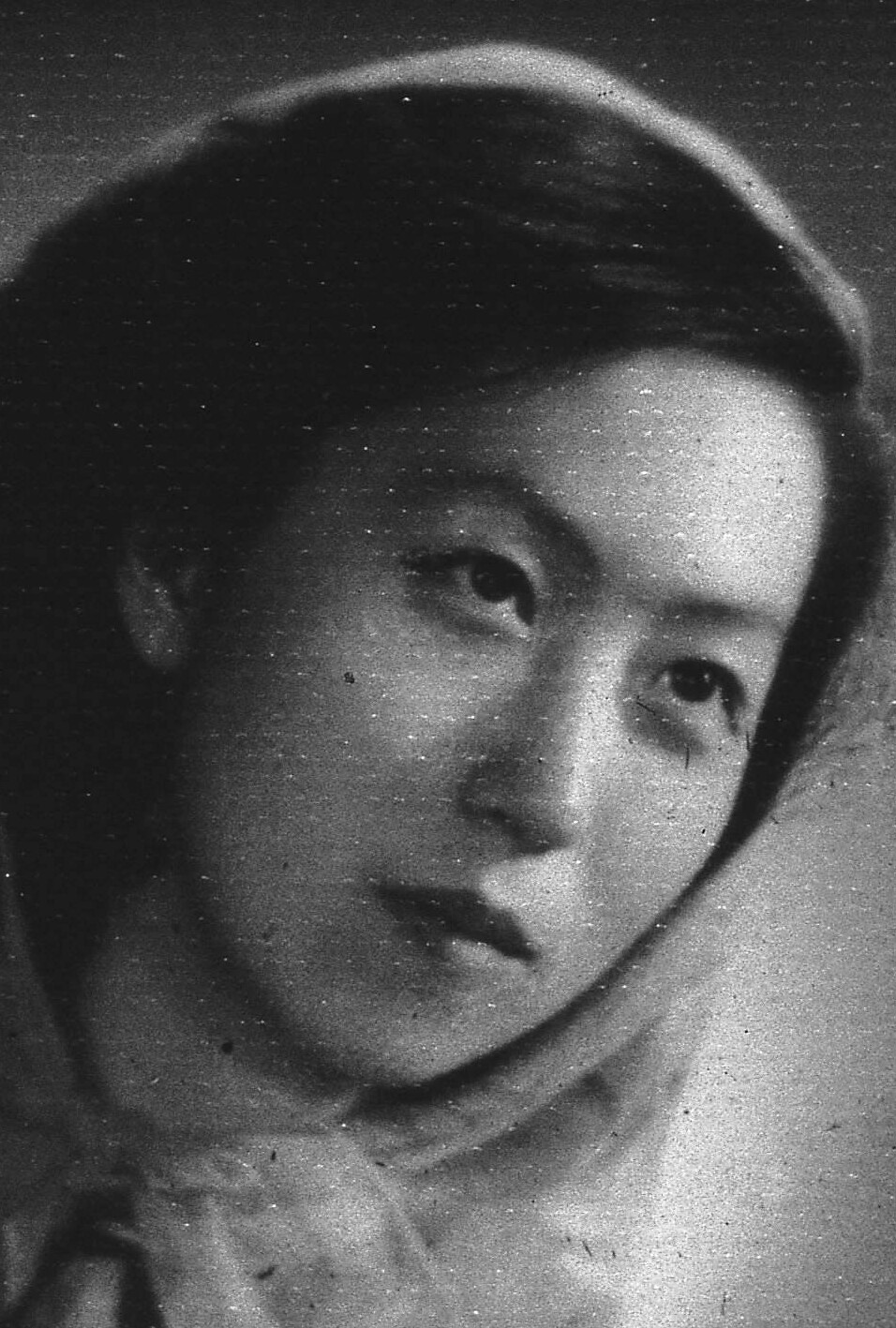

Harvard's Schlesinger Library holds a ~73-minute audio recording of a lecture, "Chinese Translation: A Vehicle of Cultural Influence," attributed to Eileen Chang (張愛玲, 1920–1995) — the Shanghai-born novelist of Love in a Fallen City (傾城之戀) and Lust, Caution (色,戒), who fled the People's Republic for Hong Kong in 1952 and later settled in the United States. She gave the talk as a Radcliffe Institute fellow (1967–69), under her married name Reyher.
Listen at Harvard (streaming): Bunting Institute Seminars — "Reyher" track · persistent link URN-3:RAD.SCHL:106426192 · finding aid sch01475.
The recording
- Speaker: attributed to Eileen Chang (張愛玲) — see the caveat below.
- Title: "Chinese Translation: A Vehicle of Cultural Influence" (the recording's chair; an academic account gives the variant "…Cultural Exchange").
- Date: 1 April 1969, at the Radcliffe Institute for Independent Study, Cambridge, Massachusetts.
- Length: 1:12:46 — a ~50-minute lecture followed by ~20 minutes of audience questions.
- Subject: the history of Chinese literary translation — Lin Shu (林紓) and his rendering of Rider Haggard, Yan Fu (嚴復), Lu Xun (魯迅), and how translation was bent to state policy on the mainland after 1949.
- Held by: Schlesinger Library, Radcliffe Institute, Harvard University. Identifier RA.T-106 ("Bunting Institute Seminars. Reyher; Bas-Cohain, n.d.").
On the attribution
Harvard's catalogue does not name Eileen Chang; it credits the track only to "Reyher" — the surname of Chang's American husband, the playwright Ferdinand Reyher (d. 1967). The identification rests on: (1) the companion track's host announcing the following week's speaker as "Eileen Chang Reyher" with this exact title; (2) Chang's documented Radcliffe Institute fellowship (1967–69) under that married name; and (3) convergent outside sources describing a 1 April 1969 Radcliffe lecture of this title and 1h12m length as hers — a Lingnan University academic article, a USC Libraries exhibit, and October 2026 Chinese-language press (United Daily) — all matching this track. The identification is now widely made and well-supported, though Harvard's own catalogue still files it only under "Reyher."
How it surfaced | 錄音如何被發掘
The recording went unheard for decades because it was filed under the wrong name. When the journalist Chai Jing (柴靜) set out to find any audio of Chang, she drew blanks everywhere: there was no reliably sourced recording online; the East Asian Library at UC Berkeley — where Chang had worked — told her it had none; USC's catalogue of Chang's papers held no lead; she found no film or sound from Chang's October 1961 visit to Taiwan; and letters to the US National Archives and enquiries into US State Department overseas-mission files went nowhere.
The break came from Chang's own correspondence. In a 1969 letter to Stephen Soong (宋淇), Chang mentioned that she had lectured at the Radcliffe Institute — so Chai wrote to Harvard's Schlesinger Library. Its research-services lead, Becky Morin, replied that the library did hold such a recording, digitised in 2025, catalogued as "Bunting Institute Seminars. Reyher; Bas-Cohain" — under Reyher, Chang's married surname. A search for "Chang" would never have found it. Chai confirmed the speaker by matching the audio, passage by passage, against Christopher Lee's 2015 PMLA transcript of the lecture (the authoritative text cited under Sources below); the order and content lined up. 「是張愛玲」 — it is Eileen Chang — she concluded. For the broadcast she cleaned the audio only lightly (moderate noise reduction and EQ), and states that she used no AI to recreate Chang's voice and left unclear words unfilled; the roughly half-hour of audience questions after the lecture — including an exchange on Dream of the Red Chamber (《紅樓夢》) — is not in the published text and she leaves it to future researchers (柴靜,〈張愛玲錄音如何發掘?〉, Substack).
Why it belongs in this archive
Eileen Chang's life traces the same escape route this archive keeps returning to. She wrote Shanghai and Hong Kong as twinned cities, left the mainland when the new political order made her kind of writing impossible, and spent her last decades abroad — her Shanghai work circulating for years only in banned or pirated editions. Her subject in this very lecture — how a state rewrites what may be translated and read — is the same machinery that later reached the newsrooms, bookshops and vigils documented across this site (see 📕 Book Censorship under the NSL and 📰 Press Freedom under Siege).
Her two cities have since met again in the headlines. During Shanghai's 2022 Covid lockdown, as talk of 「潤」 ("run", i.e. emigrate) spread online, netizens rediscovered her as the writer who got out in 1952 — dubbing her 「跑路天后」 and 「潤學女神」 (China Digital Times) — and the commentator 長平 (Chang Ping), writing for Deutsche Welle, urged readers to pick up The Rice-Sprout Song, arguing that 「《秧歌》與當下上海的境遇密切相關」 (CNA, 21 Apr 2022). Hong Kong, meanwhile, has watched its own space close. A writer who fled one silencing, recorded here explaining how translation outlives it, is worth preserving alongside them — which is the point of the archive's Extra collection.
(This framing is the archive's own editorial note, not a claim about the lecture's content.)
Eileen Chang and Hong Kong | 張愛玲與香港
Hong Kong shaped Chang twice, at the two great ruptures of her life. She first arrived in August 1939, at eighteen, to read English literature at the University of Hong Kong — she had won a place at the University of London, but war in Europe sent her east instead. Her studies were cut short when Japan attacked the city: through the Battle of Hong Kong (December 1941) she volunteered as an air-raid nurse and watched the bombing of civilians, and she left without a degree, returning to occupied Shanghai in 1942. That wartime winter became her material — the essay 〈燼餘錄〉("From the Ashes") and the novella 《傾城之戀》(Love in a Fallen City), in which the fall of the city is the catastrophe that, perversely, "fulfils" a romance. The Hong Kong stories she wrote on her return — including the 《沉香屑》("Aloeswood") tales — made her an overnight sensation in 1940s Shanghai. "The liberal arts education she received here shaped her… When she started writing, she wrote about Hong Kong," says HKU professor Nicole Huang (Zolima CityMag).
Hong Kong took her in again at the next rupture. In July 1952 Chang left the People's Republic for Hong Kong — officially to resume her HKU studies — and stayed three years. She worked as a translator for the United States Information Service (USIS), under whose book programme she wrote two anti-Communist novels drawn from the land-reform violence she had glimpsed on the mainland: 《秧歌》(The Rice-Sprout Song) and 《赤地之戀》(Naked Earth), which she later rewrote in Chinese (3 Quarks Daily). In 1955 she sailed for the United States and never returned to either city; her HKU years resurface in the autobiographical 《易經》(The Book of Change) and 《小團圓》(Little Reunions).
Her legacy | 她留下了什麼
In an age that built monuments, she kept the record of ordinary people — honestly, without flattery — and that record has outlived every regime that tried to edit it.
在一個只立紀念碑的時代,她為凡人留下了紀錄——不美化、不說教;而這份紀錄,比每一個想刪改它的政權都活得更久。
1. The ordinary person as the measure of an age | 凡人是時代的總量
In 1944, answering the critic Fu Lei (傅雷), who wanted grander, more tragic fiction from her, Chang set out her creed in the essay 〈自己的文章〉("Writing of One's Own"). She would not write "monuments of the era"; she wrote weak, compromised, ordinary people — because they, not heroes, carry history:
「他們不是英雄,他們可是這時代的廣大的負荷者。」
"They are not heroes, but they are of the majority who actually bear the weight of the times." (English as quoted by James Jiang, Sydney Review of Books)
「正是這些凡人比英雄更能代表這時代的總量。」
"It is precisely these ordinary people who, more than heroes, represent the sum total of this age." (our translation)
She did not turn away from "the era" — the word recurs throughout the essay. She insisted on seeing it through ordinary lives. That is why every later generation, under every later order, keeps finding itself in her. The scholar Perry Link puts it plainly: she "looks past the grand political system itself and focuses instead on the lives of people — how they feel and behave as they adapt to what the system forces upon them" (NYR Daily, 2015).
2. A defence of the "irrelevant" | 不相干的事
Her memoir of the Battle of Hong Kong, 〈燼餘錄〉("From the Ashes", 1944) — written after she lived through the December 1941 invasion as an HKU student and volunteer nurse — turns the creed into a request to historians:
「可是私下裏總希望他們多說點不相干的話。」
"…but privately I have always wished they might concern themselves a little more with irrelevant matters."
「人生的所謂『生趣』全在那些不相干的事。」
"Man's joie de vivre is solely to be found in life's irrelevancies." — tr. Oliver Stunt, Renditions 45 (1996)
What she remembers of the war is not its strategy but its people: a classmate's dismay at having 「沒有適當的衣服穿」 — nothing suitable to wear — and the senseless death of her history teacher, N. H. France, which she refuses to dress up as glorious sacrifice: 「一個好先生,一個好人。人類的浪費……」 ("A good teacher, a good man. The waste of humanity…" — our translation). In 《傾城之戀》 she pushes the irony to its limit: 「香港的陷落成全了她」 — "Hong Kong's defeat had brought Liusu victory" (tr. Karen S. Kingsbury). A whole city falls so that one ordinary woman can marry. The national catastrophe is not allowed to swallow the individual.
3. Honesty that flatters no one | 不美化任何人
What keeps this from being sentimental is that Chang spares nobody — not the state, not "the people", not herself. In the same war memoir she writes of 「我們這些自私的人」 ("we, the selfish") who carried on as if nothing had happened. Her chosen key is not tragic grandeur but desolation:
「悲壯是一種完成,而蒼涼則是一種啟示。」
"Tragedy is a kind of closure, while desolation is a form of revelation." (English as quoted by James Jiang, Sydney Review of Books)
This is also why her humanism is contested, and the page should say so. Wang Anyi (王安憶), the Shanghai novelist often called her heir, admired the style and rejected the worldview: 「我可能永遠不能寫得像她這麼美,但我的世界比她的大。」 ("I may never write as beautifully as she did, but my world is larger than hers" — quoted in 胡紅英, 2021). The scholar Haiyan Lee observes that in Chang's fiction the hierarchies of class, gender and race "intersect in such a way as to diffuse any possibility of righteous indignation, unalloyed compassion, or solidarity-making" (MCLC, 2007). Chang's care for people is not warmth. It is a refusal to look away from them, or to lie about them.
4. Work that no power can use whole | 誰都無法完整收編
Because she gives no camp the heroes it wants, every power that has tried to claim her has had to cut her first:
- The PRC publishes her love stories but still not her two novels of the early-1950s countryside, 《秧歌》(The Rice-Sprout Song) and 《赤地之戀》(Naked Earth), which as of 2021 「無法在中國大陸出版」 (王曉珏, 《二十一世紀》 2021). In 1996–2001 the official 《文藝報》 even listed 「標榜人性」 — "flaunting human nature" — among the marks of wartime collaboration (張泉, 《二十一世紀》 2003). Her humanism was never politically neutral: it has always been read as a position. Today, a Shanghai scholar says, 「官方沒說不能研究張愛玲,但也沒有把她看得很重要」 (CNA, 2020).
- The anti-Communist side could not use her whole either. 《赤地之戀》 was written under a US Information Service programme, yet it touched on the Kuomintang and Chiang Kai-shek, and an abridged edition was not made public in Taiwan until 1978 (Hsieh, Open Letters Monthly).
- Her own American publisher, Scribner's, asked her for an explicit death scene in the English Rice-Sprout Song "to strengthen the novel's political condemnation" (王曉珏 2021). She had wanted the book understated. Hu Shih read it as she meant it: 「這本小說,從頭到尾,寫的是『飢餓』」 — "this novel, from beginning to end, is about hunger" (letter to Chang, 25 January 1955).
The Chang that the state tolerates is exactly the humanist Chang — so long as it stays in the bedroom and the apartment. It becomes intolerable when the same attention reaches a hungry village.
Why she keeps coming back | 一再復活
Her "resurrections" — the recurring 張愛玲熱 — were each set off by something outside the books: C. T. Hsia's A History of Modern Chinese Fiction (1961), which called her "the best and most important writer in Chinese today"; the Taiwan and Hong Kong editions and films of the 1960s–80s; the mainland's post-Mao rediscovery from the early 1980s; her solitary death in Los Angeles in 1995; Ang Lee's Lust, Caution (2007); the posthumous Little Reunions (2009), which sold some 700,000 copies in China in six months (NYRB, 2018); the 2020 centenary; and now, in October 2026, her own voice. Some of these waves ran on gossip and nostalgia; one critic describes the 1990s fever ending, as fevers do, as 「一種時尚」, a fashion (溫儒敏, 2000). As David Der-wei Wang (王德威) put it, after 1949 「與其說張愛玲仍在創作,倒不如說她不斷地『被』創作」 — she was less writing than continually being written by others (〈落地的麥子不死〉).
The triggers explain when she returns. The work explains why readers stay once she does. Introducing the Harvard recording this month, Chai Jing read Chang's politics the same way — as 「从个人感受出发的」, grounded in personal experience rather than doctrine (Chai Jing, Substack, 19 Oct 2026).
A note on famous lines | 名句辨正
Two of the most-shared "Eileen Chang" lines are known only from the memoir of her ex-husband, Hu Lancheng (胡蘭成), 《今生今世》, not from anything she published: 「因為懂得,所以慈悲」 and 「低到塵埃裡……從塵埃裡開出花來」. And 「現世安穩,歲月靜好」, from their 1944 marriage document, was by Hu's own account his addition. Many other lines circulating under her name — 「因為愛過,所以慈悲;因為懂得,所以寬容」, 「你還不來,我怎敢老去」 — are not hers at all (騰訊新聞 explainer, 2021). Every line this page attributes to Chang comes from her own published writing.
Why this belongs on this site (the archive's editorial note): Chang's request that history 「多說點不相干的話」 is close to this archive's own purpose — keeping the "irrelevant" records of ordinary people that official history would rather drop: the 📰 Press Freedom under Siege newsrooms, the 🕯️ Tiananmen Vigil candles, the residents of 🔥 Hong Kong Fire 2025.
In her words | 她的話
Short passages from Chang's own writing, with Chinese translation. More — from the 1969 Radcliffe lecture — will be added here once verified against the published PMLA text (not the machine transcript of the audio).
On Communist rule and nationalism — from her 1965 autobiographical statement for World Authors 1950–1970, on why, after "the final disintegration of ingrown latter-day Confucianism," Communist rule could feel familiar to many Chinese:
"To many others Communist rule is also more palatable for being a reversion to the old order, only replacing the family with the larger blood kin, the state, incorporating nationalism, the undisputed religion of our time."
「對另外許多人來說,共產黨的統治也更容易接受,因為它回到了舊秩序:只是用更大的血緣共同體——國家——取代家庭,並吸納了民族主義,這個我們時代無可爭議的宗教。」
— World Authors 1950–1970, ed. John Wakeman (H. W. Wilson, 1975; written 1965); Chinese after 高全之, 《張愛玲學》 (麥田, 2003).
On screen | 影像
Chai Jing's 2026 episode. The independent journalist Chai Jing (柴靜) — the former CCTV reporter whose 2015 pollution documentary Under the Dome (穹頂之下) drew 300 million views before censors pulled it, and who now runs one of the most-watched overseas Chinese-language current-affairs channels on YouTube — devoted an October 2026 episode to Chang and this newly surfaced recording: 「周恩來為什麼沒留住張愛玲?|張愛玲錄音公開」 ("Why didn't Zhou Enlai keep Eileen Chang? | Eileen Chang's recording made public"). It frames Chang's 1952 departure from the mainland against the new state's efforts to keep its writers. Drawing on the memoirs of the Shanghai cultural official Xia Yan (夏衍, 《懶尋舊夢錄》) and other accounts, Chai traces a united-front policy — associated with Zhou Enlai — under which Xia courted Chang: she published the novels 十八春 and 小艾 under the pen name 梁京 in the Shanghai paper 亦報, associates were asked to talk her out of leaving, and a 1953 letter written at Xia's request even urged her not to emigrate further — yet she went to Hong Kong all the same. The episode has drawn online debate. The recording itself has spread widely across the Chinese-language internet since mid-October 2026 — full copies and clips reposted by netizens on Weibo and Xiaohongshu — though it remains a copyrighted Schlesinger holding, not an openly licensed one (United Daily, 18 Oct 2026).
Watch on YouTube · channel 柴靜 幕後 Chai Jing. (Embedded via YouTube's own player — a standard embed, distinct from the Harvard audio below, which we do not host.)
Roland Soong on Eileen Chang. Roland Soong (宋以朗) — the writer behind the long-running blog EastSouthWestNorth who administers Chang's literary estate, and who chose to publish her posthumous works — gives a closer look at her life and legacy. (He is also the rights-holder whose permission any reuse of the recording would need — see Rights.)
Watch on YouTube.
Rights — why this page only links
Reproducing the audio or a full transcript needs permission we do not yet have:
- The Schlesinger Library states it does not hold copyright in most of its audiovisual material and places responsibility on the user to identify and clear rights with the actual holder, and to contact a librarian before publishing (permissions & copyright).
- The lecture is Eileen Chang's own spoken work, so copyright in her words rests with her estate (Chang died in 1995; the estate is administered by Roland Soong / 宋以朗). A full transcript or the audio would need the estate's permission, independent of Harvard.
- A rough machine transcript exists as a working draft but has errors on names and in the Q&A and has not been corrected against the audio.
So, pending clearance, this page: links to Harvard's streaming page (always safe), describes the recording in our own words, and credits the Schlesinger Library as the source. To go further — host the audio, publish a corrected transcript, or quote at length — we would first ask the Chang estate and the Schlesinger Library.
Sources
- Harvard Schlesinger Library — streaming page and finding aid: audio 503996508, sch01475, persistent URN-3:RAD.SCHL:106426192.
- Schlesinger Library, Permissions & Copyright and Image Use Policy.
- Lingnan University, Journal of Modern Literature in Chinese — on Eileen Chang's "Chinese translation: a vehicle of cultural exchange" (1 April 1969 Radcliffe lecture) (Lingnan Commons).
- Eileen Chang — Wikipedia (biography; Radcliffe fellowship under married name Reyher).
- Eileen Chang, autobiographical entry, World Authors 1950–1970: A Companion Volume to Twentieth Century Authors, ed. John Wakeman (H. W. Wilson, 1975; written 1965) — source of the "In her words" quotation; English original reproduced here; 高全之 Chinese translation in 《張愛玲學》 (麥田, 2003).
- Chai Jing (柴靜), 「周恩來為什麼沒留住張愛玲?|張愛玲錄音公開」 (YouTube, Oct 2026) · channel 柴靜 幕後 Chai Jing.
- A deeper look into Eileen Chang through Roland Soong (YouTube) — Roland Soong 宋以朗, executor of Chang's estate (blog EastSouthWestNorth), on her life and legacy.
- 柴靜 (Chai Jing), 〈張愛玲錄音如何發掘?〉 (Substack, Oct 2026) — her own account of tracing the recording: the dead ends at UC Berkeley, USC and the US National Archives, the clue in Chang's 1969 letter to Stephen Soong, and the Schlesinger Library's "Reyher" catalogue entry.
On her legacy (Chang's essays are cited from their first venue and the Crown 皇冠 editions; the works remain in copyright, so only short excerpts are quoted):
- Eileen Chang, 〈自己的文章〉 ("Writing of One's Own"), 《新東方》 1944; collected in 《流言》 (1944; Crown 皇冠). English: Andrew F. Jones, Written on Water (Columbia UP, 2005).
- Eileen Chang, 〈燼餘錄〉 ("From the Ashes"), 《天地》 no. 5, Feb 1944; collected in 《流言》. English: Oliver Stunt, Renditions 45 (1996).
- Eileen Chang, 〈傾城之戀〉 (1943), in 《傳奇》; English: Karen S. Kingsbury, Love in a Fallen City (NYRB Classics, 2007).
- James Jiang, "Love and Desolation: Remembering Eileen Chang", Sydney Review of Books (2020) — source of the English renderings of 〈自己的文章〉 quoted above.
- Perry Link, "Mao's China: The Language Game", NYR Daily, 15 May 2015.
- Haiyan Lee, review of Love in a Fallen City, MCLC Resource Center (2007).
- 王曉珏, 〈測繪冷戰文化地形圖:張愛玲與《秧歌》〉, 《二十一世紀》 no. 184 (2021) — USIS context, the Scribner's death scene, Hu Shih's letter, PRC publication status.
- 張泉, 《二十一世紀》 (2003) — the 1990s 《文藝報》 campaign against the "Chang fever".
- Yu-Yun Hsieh, "Eileen Chang's Changes: From Love in Redland to Naked Earth", Open Letters Monthly (2015).
- 王德威, 〈落地的麥子不死〉 (1996); 溫儒敏, on the "Chang fever" (2000); 胡紅英, on Wang Anyi and Chang (2021).
- Revival history: NYRB, 7 Jun 2018; NYT obituary, 13 Sep 1995.
- Contemporary resonance: China Digital Times — 润 (2022 lockdown); CNA, 21 Apr 2022 (長平 on 《秧歌》); CNA, 29 Sep 2020 (Shanghai centenary); Chai Jing, Substack, 19 Oct 2026.
- On misattributed quotations: 騰訊新聞 explainer (2021).
On Eileen Chang and Hong Kong:
- How Hong Kong Shaped Eileen Chang — Zolima CityMag (her HKU years, the war, Love in a Fallen City, the 1952 return).
- Eileen Chang at the University of Hong Kong — archives exhibition — HKU (enrolled Aug 1939; left May 1942 without completing her degree).
- 'Lust, Caution' and the HKU connection — SCMP.
- Eileen Chang's Naked Earth — 3 Quarks Daily, on the USIS-commissioned Hong Kong novels.
- 《張愛玲罕見演講原聲錄音在中文互聯網熱傳》 — United Daily 聯合日報 (Malaysia): the recording's spread on the Chinese-language internet (Oct 2026).
- In a Bronze Mirror: Eileen Chang's Life and Literature — USC Libraries Scalar exhibit, "Untitled Speech, Radcliffe Institute, 1969" (catalogues the 1 April 1969 Radcliffe talk 中國翻譯作為文化影響的橋樑, citing Phong Chang 張鳳's essay "張愛玲在哈佛:滿是蒼涼的因緣"; notes it was "possibly delivered").
- The published text of the lecture: Eileen Chang, "Chinese Translation: A Vehicle of Cultural Influence," ed. & intro. Christopher Lee, PMLA 130.2 (March 2015): 488–499 (MLA "Little-Known Documents"; edited from Chang's manuscript — the authoritative transcription to quote from, in preference to any machine transcript of the audio). Chang's 1 April 1969 Radcliffe delivery is confirmed in her own letter to Stephen Soong.
- Hui Meng, "Awkward Betweenness and Reluctant Metamorphosis: Eileen Chang's Self-Translation," TranscUlturAl 13.1 (2021): 2–22 (CC BY 3.0) — discusses the lecture and quotes it (p. 496) with a PMLA page citation.
Backlinks